Sapientia
Breath, bell-tone, and the first name spoken into darkness.
A work for voices, chamber sound, and jazz by J.J. Wright
Children’s voices begin almost alone. Around them: chant, chamber color, a piano trio, gospel heat, and the charged air of a room learning how to wait. Across 44 minutes, seven ancient invocations keep changing the space until waiting becomes arrival.
Children’s choir at the center · adult soloists · chamber ensemble · piano trio
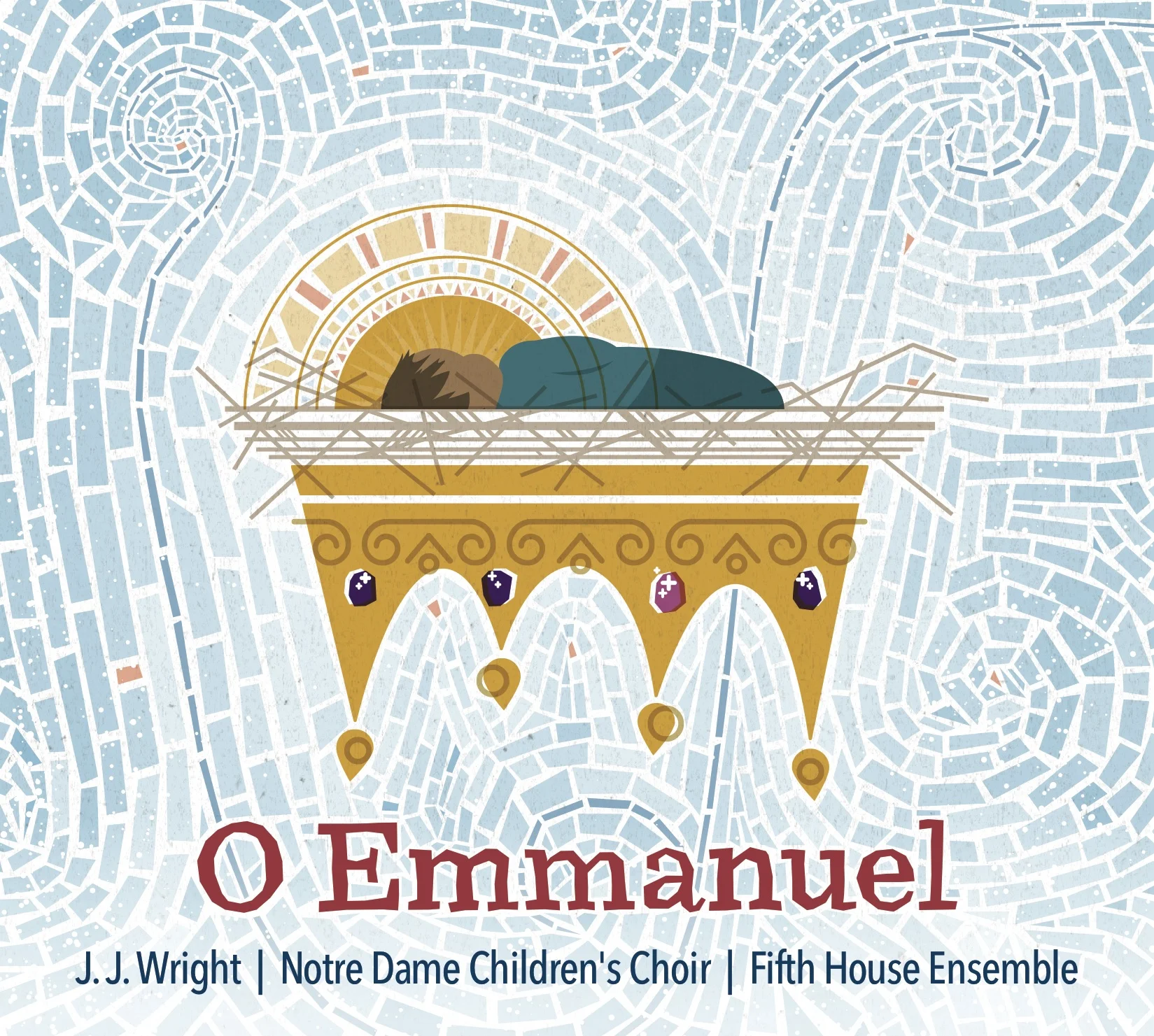
The work
The seven Great O Antiphons do not count down to the piece. They are its architecture: seven names called into darkness, each one altering what can be heard next.
Children’s voices stand at the center—not as seasonal decoration, but as principal artists beside adult soloists, chamber musicians, and a jazz trio. Chant is placed under the pressure of improvisation. Contemplation gathers pulse and gospel heat. By the final Alleluia, the distance between stage and room has begun to disappear.
Seven ancient invocations give longing a voice and a shape.
Chant, hymn, jazz, and gospel place pressure on one another.
Voices and room cross into the final Alleluia together.
The nine-movement concert core may be preceded by the optional opening “Gabriel’s Message.”
Listen
Three brief passages: breath before language, chant breaking into color, and the instant a gathered room becomes chorus.
Breath, bell-tone, and the first name spoken into darkness.
The old melody catches rhythm; the room begins to give off heat.
Many voices cross the threshold at once. Arrival becomes communal.
Watch & hear
See children’s voices, chamber players, and trio occupy the same musical weather. Then hear J.J. speak with Scott Simon on NPR’s Weekend Edition about the traditions held inside it.
Listen to the NPR featureThe work in place
The work can gather around a local children’s choir, travel with its adult ensemble, or be made by musicians already rooted in the place. Each is a different social architecture for the same score.
A prepared local children’s choir becomes the center of the encounter. J.J., bass, and drums travel; the remaining voices, strings, and winds can arrive with them or emerge from the place itself.
J.J., the adult soloists, winds, strings, bass, and drums cross the distance together. A children’s choir prepared in the host community meets them inside the score.
A local company inhabits the complete work under an approved license. J.J. can enter the process as pianist, conductor, music director, coach, or residency artist.
Any performing constellation can expand through designed light, discreet amplification, and projected image, developed as artistic materials in their own right.
J.J. can shape the work from the piano, the podium, or both.
Bass and drums form the traveling core. Adult soloists, winds, and strings may travel or emerge from the musical life already present in the city.
Forces
The scoring makes closeness audible: children and adults, breath and bow, fixed notation and a rhythm section alive to the instant.
Children’s choir with featured child soloist
Four adult soloists: soprano, mezzo, tenor, baritone
Flute, clarinet doubling bass clarinet, bassoon
String quartet
Piano, double bass, drums
Conductor or music director
A reduced orchestration is difficult but may be possible by advance arrangement. The room can remain acoustically spare or expand through light, sound, and image.
How the work travels
The rider begins where imagination meets stage dimensions, rehearsal hours, safeguarding, piano, light, cable, and crew. It makes the work buildable without pretending every room must become the same room.
“Something odd and original, entirely arresting.”Dappled Things ↗
“The music here bears the mark of true distinction.”Catholic World Report ↗
“The sheer warmth, wonder, and innocence of Christmas.”All About Jazz ↗
O Emmanuel debuted at No. 1 on the Traditional Classical chart and remained there for two consecutive weeks.
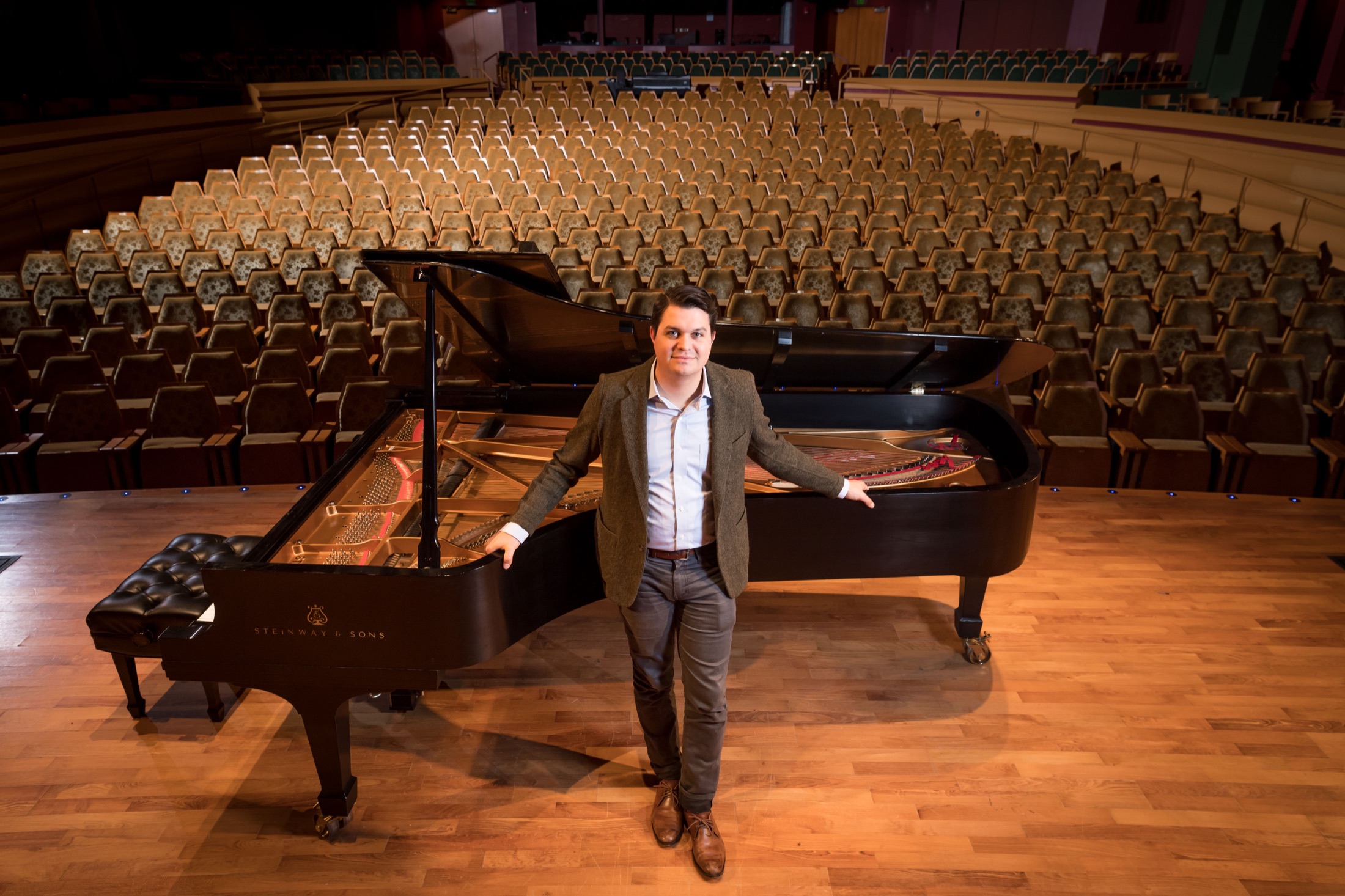
Artist · composer · pianist · conductor
J.J. Wright makes works in which music is asked to carry memory, ritual, desire, and the possibility of encounter.
In O Emmanuel, his material is relationship: between a fixed invocation and a spontaneous act; children and adult artists; inherited text and present breath. He can shape the work from the piano, the podium, or both, making it with the musicians of a place or carrying a larger ensemble into it.
More about J.J.Invitation
Name the room, the season, the children’s voices already there, and the community you hope might gather. The form can emerge from that first image.